The best cities for young and independent travelers share a set of qualities that are easy to describe and harder to find in combination. They are safe to navigate alone at any hour. They reward curiosity, because something interesting is always a short walk from where you are standing. They have public transport that is clean, comprehensible, and cheap enough that a student budget can sustain a week of daily movement across the city. And they have food that is so good, so varied, and so affordable that eating becomes one of the main reasons to keep exploring rather than a logistical necessity to get through between the real activities.
Singapore checks every one of these boxes and then adds a few that most other cities don’t offer: a food culture so varied and high in quality that UNESCO has recognised the hawker centre system as Intangible Cultural Heritage of Humanity; a built environment that moves between colonial shophouse streets, futuristic botanic architecture, and neighbourhood markets within the space of a single afternoon’s walk; and a level of English proficiency across the population that makes it one of the most navigable cities in Asia for a traveler arriving without any Mandarin, Malay, or Tamil.
Here are eight reasons it belongs at the top of the young traveler’s list.
1. The Hawker Centre System Is a Masterclass in Affordable Urban Food Culture
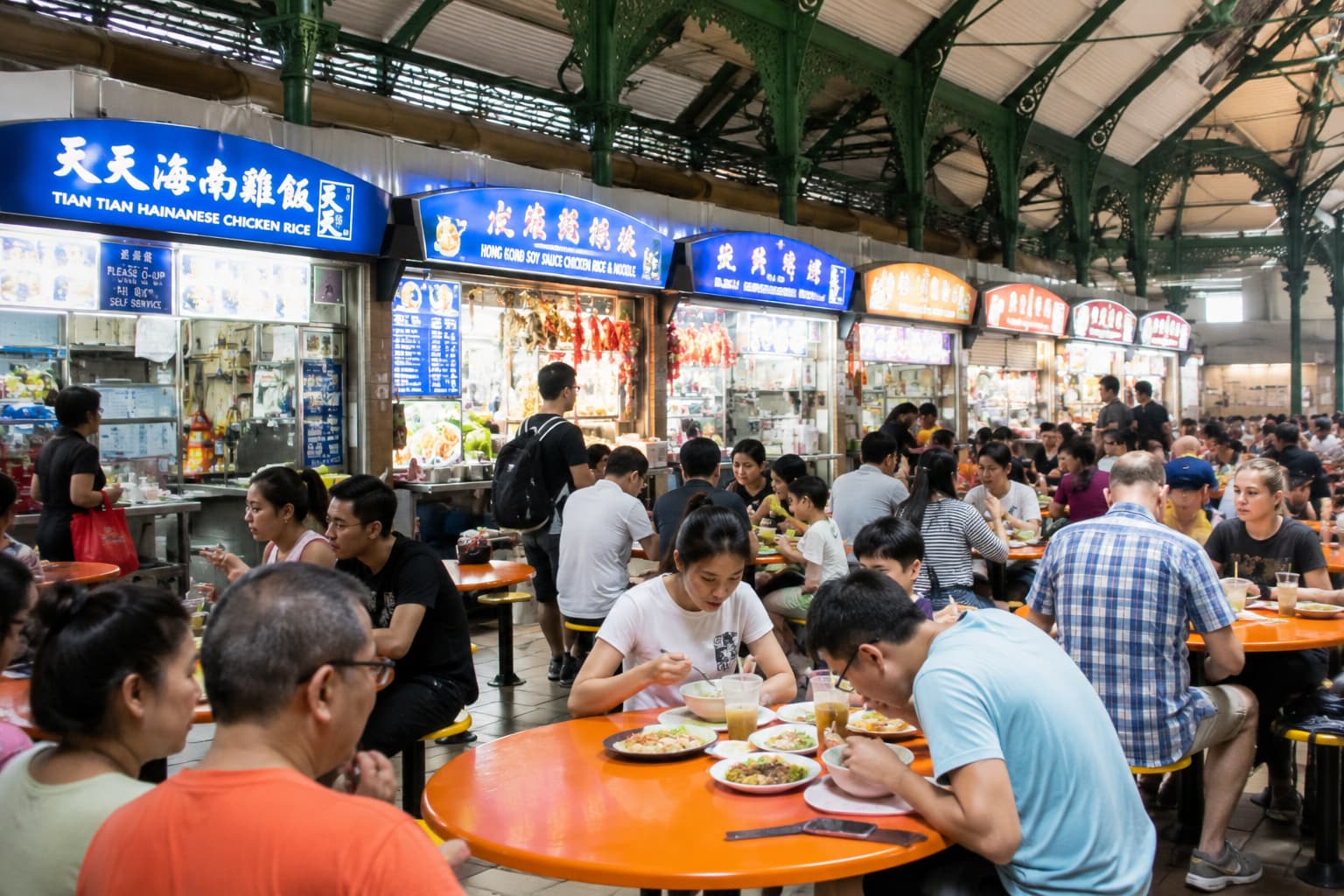
Singapore’s hawker centres are open-air cooked food markets where individual stalls, each typically run by a single family or small team, serve a specific dish or small menu at prices that have barely moved in decades. A plate of chicken rice, a bowl of laksa, a serving of char kway teow, a cup of kopi: full meals cost between two and five Singapore dollars at most hawker centres, which at current exchange rates puts a proper lunch or dinner well within any student travel budget.
The hawker centre model was developed by the Singapore government in the 1970s as a way to move street food vendors off the roads and into permanent, licensed, hygienically managed facilities without destroying the food culture that the vendors represented. The result is a network of hundreds of centres across the island, each with its own mix of stalls and its own character, and each serving as a community gathering space for the surrounding neighbourhood. Understanding this system, how it was created, how it is managed, and what it reveals about Singapore’s approach to urban planning and multicultural integration, is one of the more instructive tourism studies a student can undertake in a single city.
2. The Food Trail Across the City Is Also a History Trail
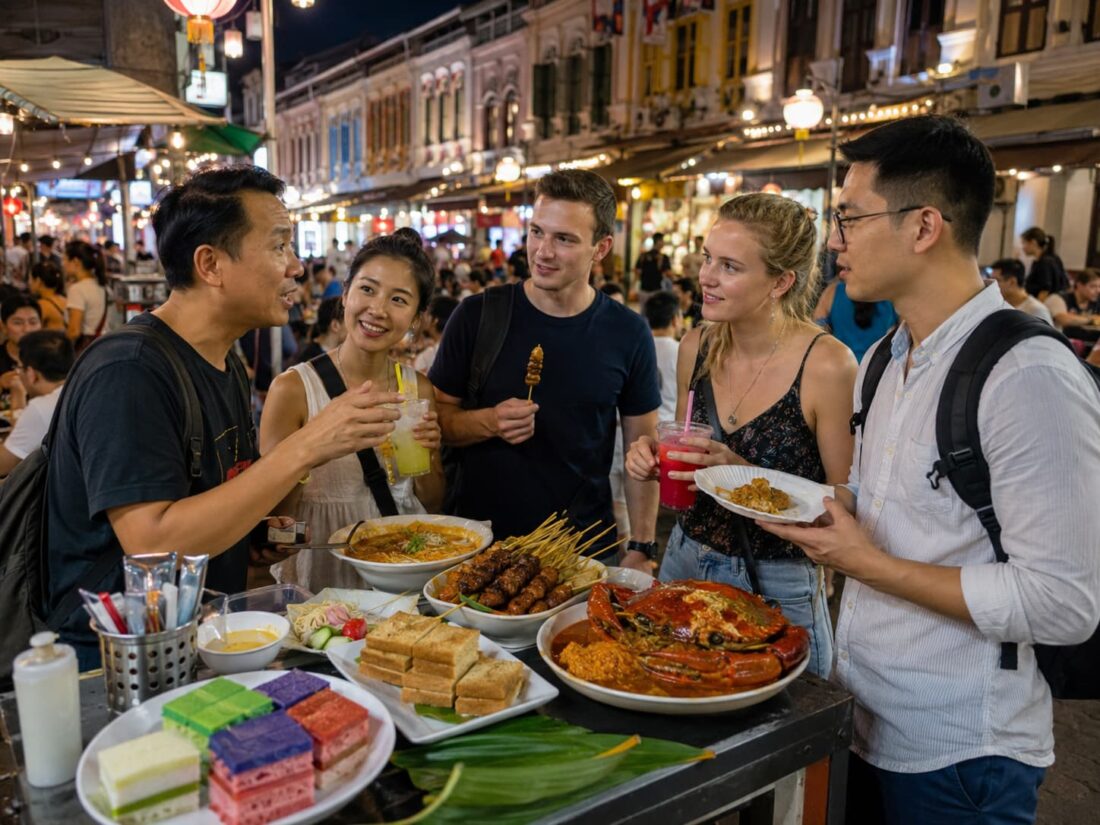
Singapore’s food culture reflects the sequence of communities that built the city: Malay, Hokkien, Teochew, Cantonese, Hakka, Tamil, Peranakan, and colonial British, each leaving a distinct culinary tradition that has continued to evolve in the specific conditions of a tropical island city-state. The geography of the food maps onto the geography of the settlement: Chinatown’s stalls reflect the Hokkien and Cantonese communities that dominated its early population; Little India’s tiffin culture traces back to Tamil workers brought to build the colonial infrastructure; Kampong Glam’s Arab Street area serves Malay and Arab food that connects to the trading networks that made Singapore prosperous before the British arrived.
Walking between these neighbourhoods in a single day, eating at each one, is a compressed history of the city that no museum visit quite replicates. The food is the primary text of Singapore’s multicultural story, and reading it in the places where it is served, rather than in an exhibition about it, produces a different kind of understanding. This is exactly the experiential learning model that good tourism education is built around.
3. Singapore Is One of the Safest Cities in Asia for Solo Travelers
The practical safety profile of Singapore for a solo traveler, and specifically a young solo traveler, is as good as any city in the world. The violent crime rate is extremely low. Street harassment is uncommon. The public transport system operates reliably and late into the night, which means that returning from a late dinner in a distant neighbourhood does not require the risk assessment that the same journey would involve in many comparable cities. The legal system is strict and consistently enforced, which produces a public environment where rule-following is the social norm rather than the exception.
For students and young travelers who are building confidence in solo travel, Singapore provides a high-reward, low-risk environment in which to develop the navigational independence, the resource management, and the social confidence that independent travel requires. The lessons covered in our piece on tips for single tourists apply here at maximum effectiveness: the city’s layout, transport system, and social culture are all optimised in ways that make solo navigation a pleasure rather than a challenge.
4. The Neighbourhoods Read Like Different Countries Within One City
One of the things that makes Singapore unusual as an urban exploration destination is that its distinct cultural neighbourhoods have retained enough physical and culinary character to feel like separate worlds within a short MRT ride of each other. Arab Street and Kampong Glam, with their carpet shops and traditional textiles alongside contemporary independent cafés, feel nothing like the Peranakan shophouse streets of Katong on the eastern coast, which in turn feel nothing like the Tamil food and temple culture of Little India, which is again completely different from the Hokkien and Cantonese food culture of the Maxwell and Chinatown area.
For a young traveler building their repertoire of urban exploration skills, this variety within a single compact city is ideal training. You learn to read a neighbourhood quickly: to identify the dominant culture from the signage, the temples, the food stalls, the music. You learn to navigate between radically different environments without the disruption of changing cities. Singapore is an urban explorer’s training ground compressed into 728 square kilometres.
5. The Botanic and Architectural Landscapes Reward Walkers Who Stray from the Tourist Trail
Singapore invests heavily in its green infrastructure, and the Gardens by the Bay with its Supertree Grove and climate-controlled biodome conservatories are the most photographed expression of this. But the less visited green spaces reward walkers who find them: the Singapore Botanic Gardens (a UNESCO World Heritage Site in their own right) cover 82 hectares of parkland with an orchid garden that contains over 1,000 species and hybrids, including the national flower. The Southern Ridges walking trail links several hilltop parks across the southern part of the island in a 10-kilometre pedestrian route above the city’s residential and commercial areas.
These walking routes have something in common with the trekking routes that tourism students study at the route-design level: they are paths through a varied environment that reward physical engagement rather than passive transportation, and they produce a different understanding of the city from what a taxi or MRT journey delivers. Our piece on the most beautiful trekking routes makes the case for routes that move through varied terrain with a clear narrative direction. Singapore’s walking trails do exactly this within an urban environment.
6. Food Tours Structure the Discovery That Independent Wandering Sometimes Misses
Singapore’s hawker centres and food streets are numerous enough that a visitor without local knowledge will often end up at the most tourist-facing stalls rather than the ones that the neighbourhood residents actually rely on. The difference in quality, price, and authenticity between a hawker stall that has been operating in the same spot for forty years and a food court stall positioned for tourist footfall is significant and not always visible from the outside.
Operators like Singapore Food Tours offer guided food walks through the city’s key hawker centres and cultural neighbourhoods, with guides who know which stalls have been passed from parent to child, which recipes have not changed in decades, and which dishes tell the most direct story of the community they come from. For young travelers who want to understand Singapore’s food culture rather than just eat in it, this kind of guided access produces a richer and more accurate picture of the city than independent exploration alone typically provides.
7. The City Teaches Urban Planning and Tourism Economics Through Its Own Design
Singapore is one of the most consciously designed cities in the world. The Housing Development Board, which manages public housing for about 80 percent of the population, has built communities that integrate residential, commercial, and food hawker infrastructure within walking distance of each other in ways that sustain neighbourhood life rather than creating bedroom suburbs dependent on car travel. The tourism infrastructure is similarly deliberate: the Sentosa resort island, the Marina Bay waterfront, the heritage conservation areas of Chinatown and Boat Quay, and the shopping districts of Orchard Road have all been developed according to a long-term strategy that balances tourism revenue against resident liveability.
For tourism students studying how cities manage the relationship between tourism and daily life, Singapore is a live case study in strategic urban tourism management. The decisions are visible in the physical environment: the preserved shophouse streets alongside the modern towers, the hawker centres integrated into the base of residential blocks, the green corridors that connect the island’s parks without disturbing the dense urban fabric above them. Reading these decisions in the city itself, rather than in a textbook about urban planning, is a different kind of education.
8. Singapore Is the Ideal First Stop for a Broader Southeast Asian Journey
For young travelers building toward more complex itineraries across Southeast Asia, Singapore functions as an ideal entry point. The Changi Airport is one of the best-connected aviation hubs in the world, with direct routes to every significant city in the region. The city’s efficiency, safety, and English accessibility allow a traveler to settle their nerves, calibrate their budget, and build their confidence before moving on to environments that are less navigable and more demanding. And the food culture provides an initial encounter with Chinese, Malay, and Indian cuisine in their highest-quality, most food-safe, most accessible urban form, before experiencing those traditions in their home countries.
A week in Singapore before continuing to Thailand, Vietnam, Indonesia, or Malaysia is not wasted time. It is orientation: practical, culinary, and psychological. The traveler who leaves Singapore for the wider region has a reference point, a comparison, and a baseline of regional food and culture that makes everything they encounter afterward more legible. For tourism students whose curriculum includes field travel components, Singapore earns its place as the starting point that makes the rest of the journey better.
A Final Thought
Singapore is sometimes dismissed as too clean, too controlled, too managed to be an authentic travel experience. That criticism misses what the city actually is: a deliberate, evolving experiment in how a multi-ethnic, resource-scarce island city-state with no natural hinterland builds a culture worth living in and visiting. The food is the most direct access point to that experiment.
A bowl of laksa in a 50-year-old hawker stall in a Housing Development Board food centre in Queenstown, eaten at a plastic table beside a retired Hokkien uncle who has been eating there since before you were born: that is not a sanitised experience. That is Singapore doing exactly what it has been doing since independence, making the most of what it has with extraordinary attention to detail and a rigorous commitment to quality that it applies to food the same way it applies to everything else.
Go hungry. Bring small notes. Eat everything twice.